
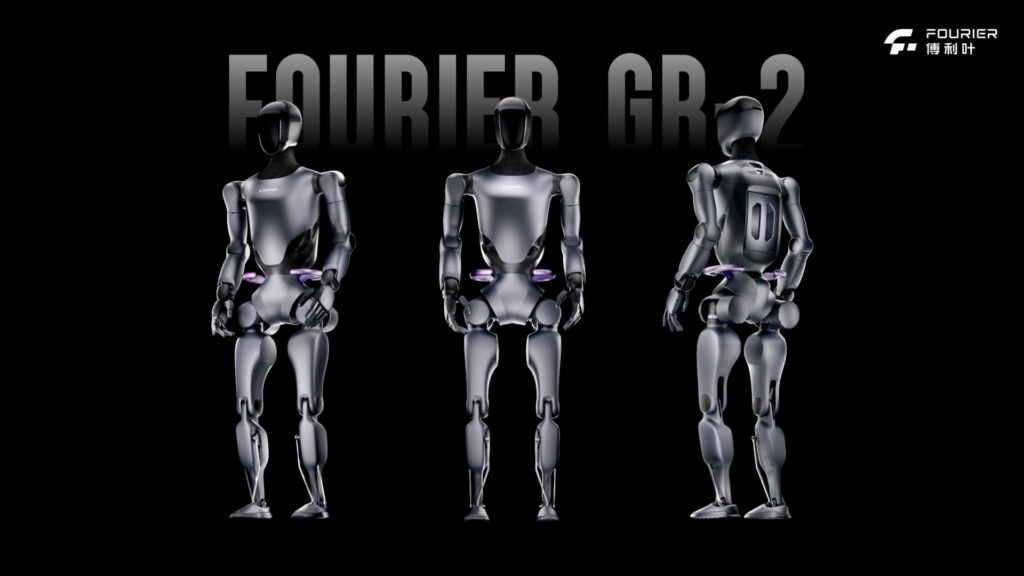
Shanghai-based robotics company Fourier has just unveiled its next-generation humanoid robot, the GR-2. Following a series of announcements in late September 2024, details are beginning to emerge about what is poised to be the successor to the GR-1, known as the world’s first mass-produced humanoid robot.
Here is what we know about the new robot, based on the information just released.
Key Specifications of the Fourier GR-2
The GR-2 is being presented as a significant hardware upgrade. The initial announcements on September 26, 2024, laid out the core specs for the new model:
- Height: 175 cm (taller than the GR-1’s 165 cm)
- Weight: 63 kg (heavier than the GR-1’s 55 kg)
- Degrees of Freedom (DoF): 53 DoF
- Load Capacity: 3 kg for a single arm
- Battery: A new detachable battery with double the capacity of the previous model, allowing for longer runtime.
Major Upgrades: Dexterous Hands and Power
The most significant advancements highlighted in the recent announcements concern the robot’s hands and actuators.
The GR-2 introduces 12-DoF (degrees of freedom) dexterous hands, doubling the dexterity of the previous model. These hands are designed to mimic human flexibility.
To make this possible, the new hands are equipped with six array-type tactile sensors. This system is designed to allow the robot to sense force, identify the shape and material of objects, and adjust its grip in real-time.
This dexterity is powered by the new FSA 2.0 (Fourier Smart Actuators). The company reported that these new actuators can exceed 380 N.m of peak torque, offering a major improvement in agility and dynamic capabilities.
A New Design for Developers
Beyond the new hands and motors, Fourier announced a few key engineering breakthroughs.
The GR-2 features an integrated cabling design, which conceals wires for a more compact and streamlined package. The company also redesigned the joint configuration, shifting from a parallel to a serial structure. This change was noted to improve debugging, lower manufacturing costs, and help the robot better learn from AI simulations.
Finally, Fourier announced a new software development kit (SDK) for the GR-2. This platform is confirmed to be compatible with mainstream programming languages and frameworks like ROS, NVIDIA Isaac Lab, and Mujoco, signaling a strong focus on making the robot accessible to developers and researchers.
0 Comments